A transparent discovery signal based on current public GitHub metadata.
Recent activity35% weight
100
Community adoption25% weight
77
Maintenance state20% weight
100
License clarity10% weight
100
Project information10% weight
100
This score does not audit code, security, maintainers, documentation quality, or suitability. Verify the repository and its current documentation before adoption.
README preview
Data Structures and Algorithms in JavaScript
This is the coding implementations of the DSA.js book and the repo for the NPM package.
In this repository, you can find the implementation of algorithms and data structures in JavaScript. This material can be used as a reference manual for developers, or you can refresh specific topics before an interview. Also, you can find ideas to solve problems more efficiently.
For a list of all available data structures and algorithms, see index.js.
Features
Algorithms are an essential toolbox for every programmer.
You will need to mind algorithms runtime when you have to sort data, search for a value in a big dataset, transform data, scale your code to many users, to name a few.
Algorithms are just the step you follow to solve a problem, while data structures are where you store the data for later manipulation. Both combined create programs.
Algorithms + Data Structures = Programs.
Most programming languages and libraries indeed provide implementations for basic data structures and algorithms.
However, to make use of data structures properly, you have to know the tradeoffs to choose the best tool for the job.
This material is going to teach you to:
🛠 Apply strategies to tackle algorithm questions. Never to get stuck again. Ace those interviews!
✂️ Construct efficient algorithms. Learn how to break down problems into manageable pieces.
🧠 Improve your problem-solving skills and become a well-rounded developer by understanding fundamental computer science concepts.
🤓 Cover essential topics, such as big O time, data structures, and must-know algorithms. Implement 10+ data structures from scratch.
What's Inside
All the code and explanations are available on this repo. You can dig through the links and code examples from the (src folder). However, the inline code examples are not expanded (because of Github's asciidoc limitations), but you can follow the path and see the implementation.
Note: If you prefer to consume the information more linearly, then the book format would be more appropriate for you.
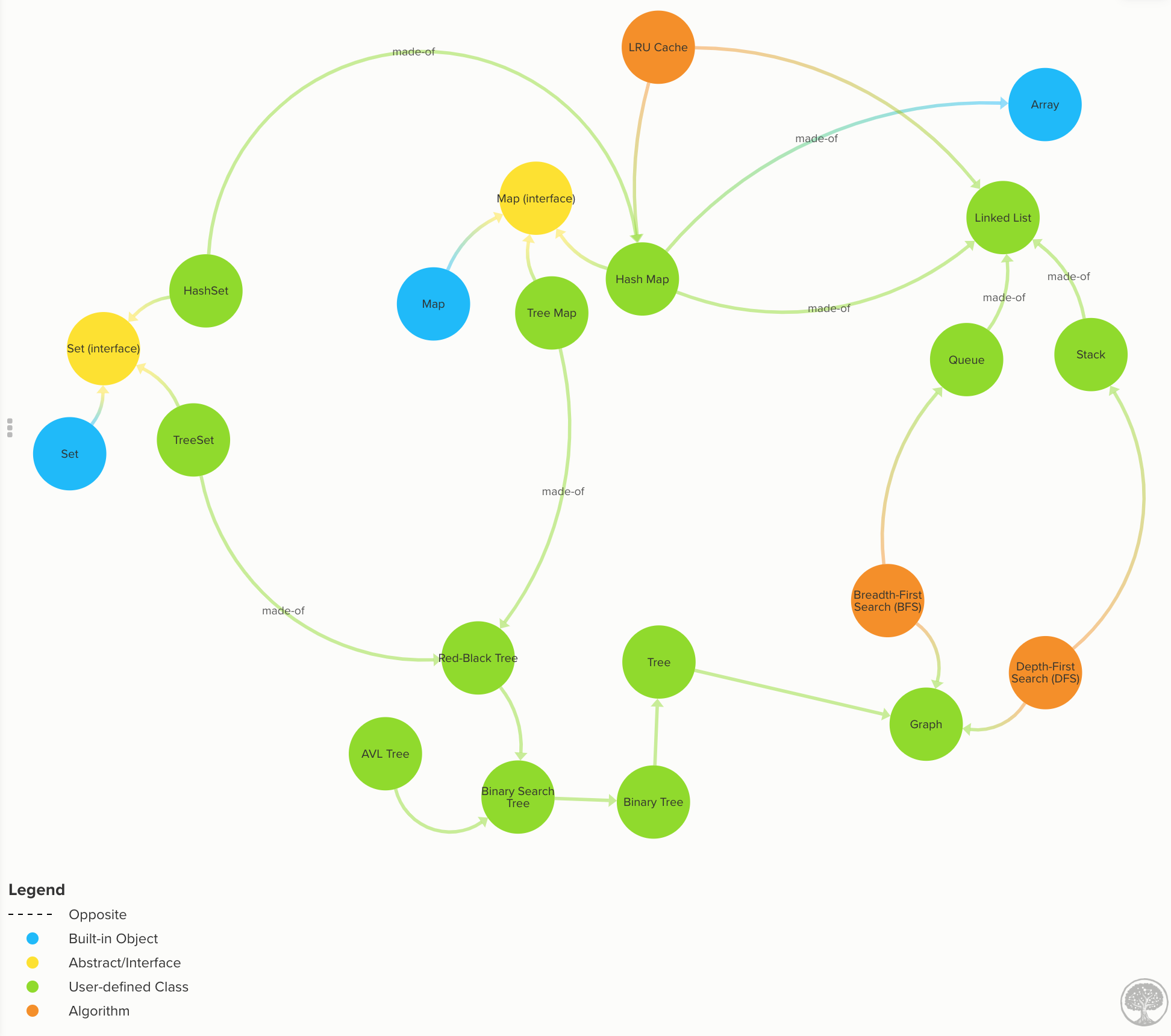
The topics are divided into four main categories, as you can see below:
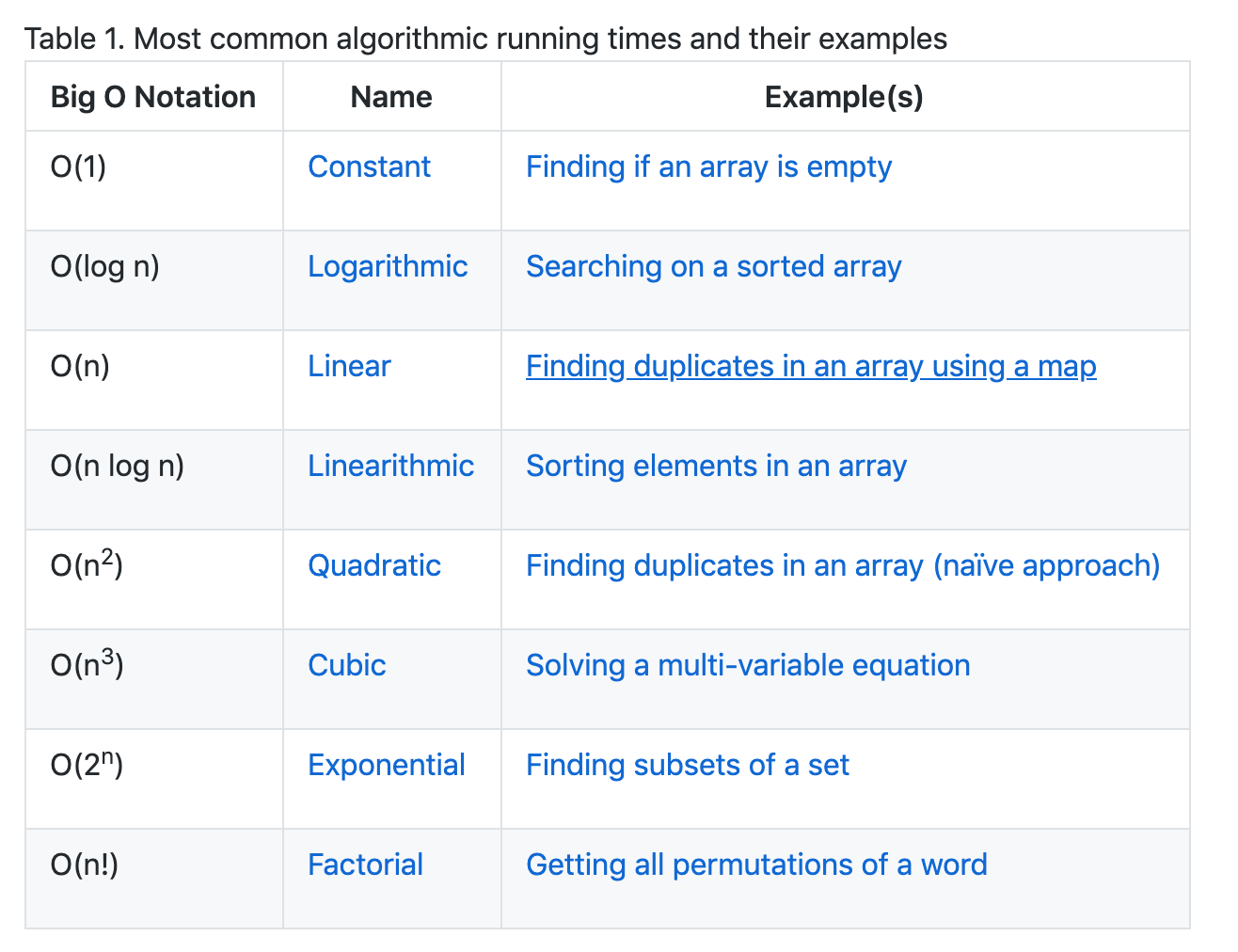
Let's say you want to find the duplicates on an array.
Using Big O notation, we can compare different solutions that solve the same problem but has a massive difference in how long it takes to do it.